
ROTARY KILN TYRE MANUFACTURER|PIYALI ENGINEERING CORPORATION
We Piyali Engineering Corporation Offers a wide range of kiln and cooler machinery spare parts and equipment like kiln and cooler Girth Gear, Rotary Kiln tyre with shell, Pinion, KILN Tyre, Support roller, Thrust Roller, Plumber block, bearing housing, labyrinth rings (Bearing sleeves), Spring plates, End cover, End plate, Nut bolts and washery pins. The kiln tyre is a massive steel casting that provides support to the kiln shell and the materials processed inside the kiln. This component is attached to the kiln shell and rotates on rollers or bearings, enabling smooth rotation of the kiln.
We offer you a huge range of Kiln and Cooler machinery spare parts and equipment in ready stock.
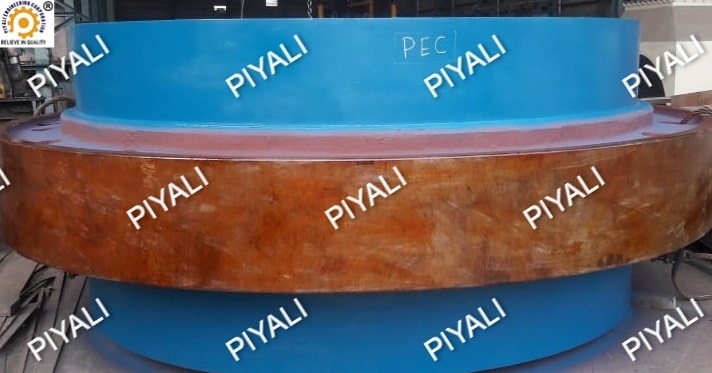
ROTARY KILN TYRE
Rotary kiln tyre is also called rolling ring, rotary kiln wheel belt, which is the main part of rotary kiln. The function of tyre is to transfer the whole weight (including firebrick, interior device and material) to riding wheel to make barrel stably move round at riding wheel. Therefore, tyre should have excellent strength and wear resistance; meanwhile, it is the part to enhance radial stiffness of barrel, so it should be with excellent stiffness.
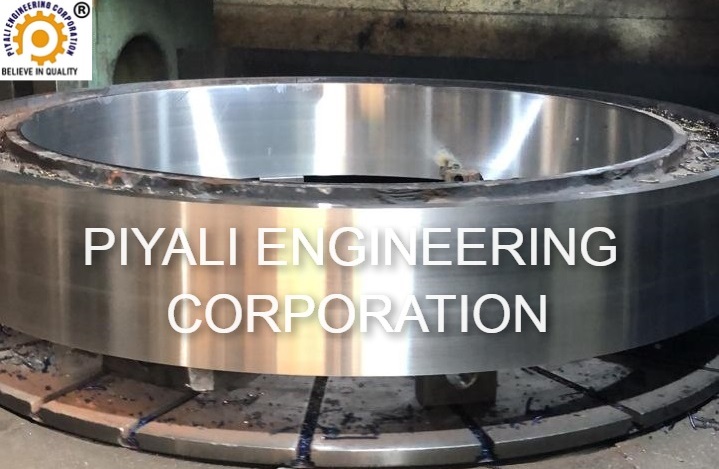
ROTARY KILN SHELL:
- A rotary kiln shell is usually made of steel plate, a large cylindrical furnace, is used at high temperatures for operations like annealing, roasting, and drying materials.
- Several steel plates are typically welded together to make a cylindrical shape for the shell.
- The size and shape of the kiln shell can change depending on the intended use and production needs.
- Refractory materials are used to protect kiln shells from corrosive atmospheres and high temperatures.
- The rollers and bearings that support the kiln shell allow it to gently rotate around its longitudinal axis.
- The drive system for the kiln shell, which rotates the kiln shell, is made up of a motor, gearbox, and other components.
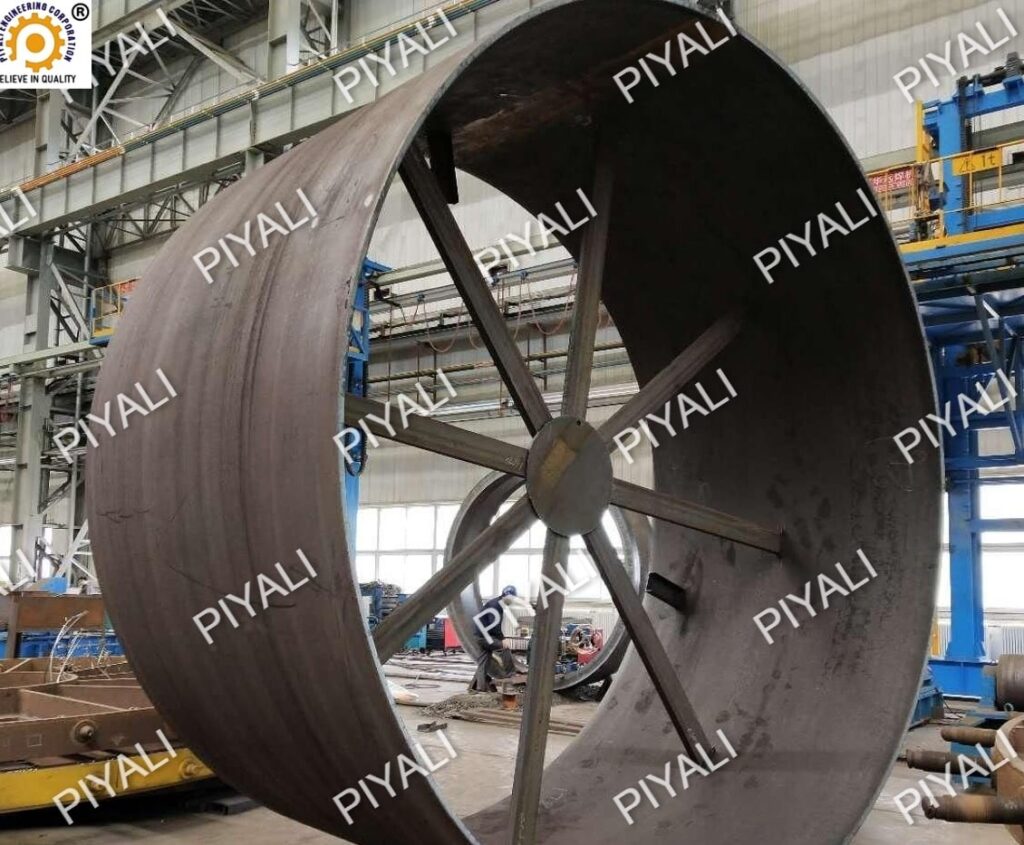
ROTARY KILN WHEEL BELT: FEATURES
Rotary kiln tyre is also called rolling ring, rotary kiln wheel belt, which is the main part of rotary kiln. The function of tyre is to transfer the whole weight (including firebrick, interior device and material) to riding wheel to make barrel stably move round at riding wheel. Therefore, tyre should have excellent strength and wear resistance; meanwhile, it is the part to enhance radial stiffness of barrel, so it should be with excellent stiffness.
KILN TYRE MANUFACTURING PROCESS:
Manufacturing kiln tyres is a multi-step, complex procedure that includes various phases. Here is a summary of each phase:
STEP 1: SIMULATION
PIYALI GROUP uses casting simulation to ensure that its cast components meet the highest quality standards. This helps ensure that the finished product meets the necessary requirements and performance standards.
- CAD model design: The first step is to create a 3D CAD model of the component. PIYALI uses special software that includes essential features includes sprue channels, feeders, and gating systems.
- Material properties: The properties of the casting material (usually steel or iron) include density, specific heat, thermal conductivity, melting temperature, and viscosity.
- Boundary conditions: Boundary conditions, including temperature and velocity, are specified for each element. This allows engineers to simulate the behavior of molten metal in the mold.
- Simulation and Analysis: The simulation uses the special software, which solves the mathematical equations that govern the behavior of the molten metal. Analysis uses simulation to identify potential defects.
- Optimization: Based on the analysis, engineers can optimize the casting process by adjusting the gating system, mold design, and material properties. This helps to ensure that the casting process produces high-quality components that meet the required specifications.
STEP 2: CASTING
Casting process involves pouring the liquid material in to the mould which contains an internal cavity of the desired shape. Casting is one of the manufacturing methods used for producing kiln tyre. Molding molten metal into a mold to create a tyre shape and size. Sand casting is a preferred manufacturing process for kiln tyres. The procedure includes the use of a sand mold to shape the molten metal into the desired form. The sand mold is packing sand around a pattern that represents the finished tyre shape.
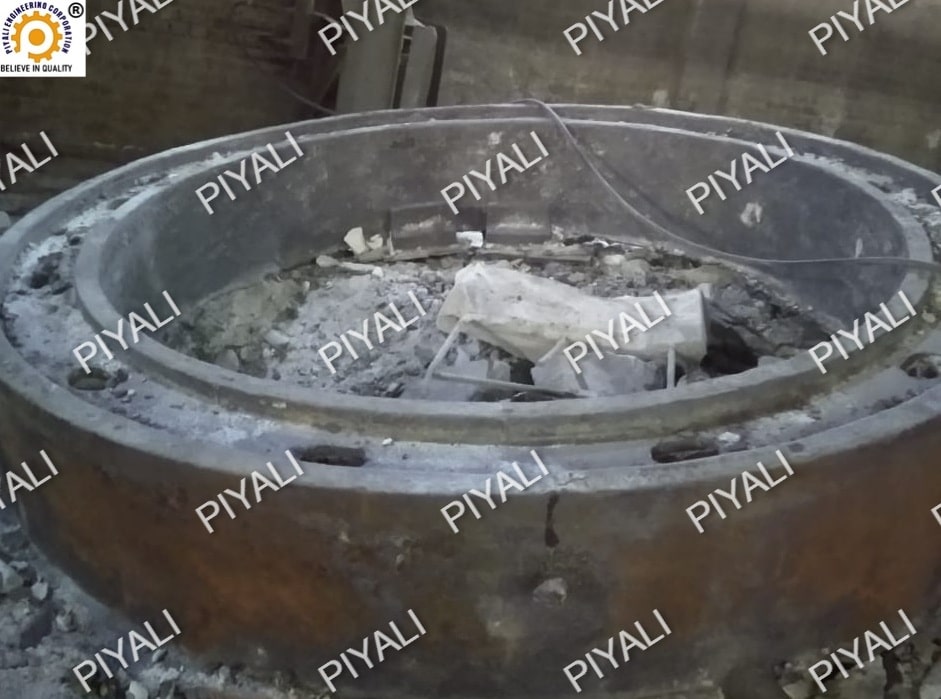
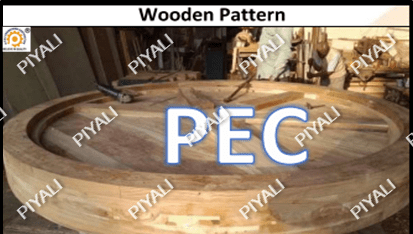
STEP 3: WOOD PATTERN
WOODEN PATTERN INSPECTION
- Dimensional Inspection: Dimensional inspection allows to check the pattern to ensure that it is of the correct size and shape for the casting.Dimensional inspection uses various precision instruments, including calipers, micrometers, and gauges, for measurements.
- Material Inspection: The material inspection is necessary to ensure that it is of high quality and complies with the casting process’s requirements.
- Surface quality: The pattern’s surface must be flawless and free of flaws like knots, fissures, or rough patches.
- Alignment: Proper alignment is essential for accurate casting.
- Inspection of the pattern assembly: In this type of inspection, the pieces should fit together correctly to make sure that there are no flaws in the joints or connections.
STEP 4: POURING PROCESS
Molding is the procedure of pouring liquid into a specific mold to ensure it solidifies in a modified form. Sand and a binding substance packs around the pattern to make a mold. To form the shape of the finished product, the molten or liquid material pours into a mold cavity or hole.The pouring process involves filling a mold with molten metal, which solidifies to form the kiln tyre.
STEP 5: HEAT TREATMENT
Heat treatment process enhances the hardness, strength, and durability of kiln tyre and their resistance. Heat treatment process improves the mechanical properties of a kiln tyre. The various heat treatments include carburizing, quenching and tempering, normalizing, and annealing. The type of heat treatment depends on the material composition of the edge and the desired mechanical properties.
HEAT TREATMENT PROCESS FOR KILN TYRE AS FOLLOWINGS :
- Cleaning: It is the process to clean the kiln tyre properly to get rid of any debris, oil, or other impurities that could interfere with the heat treatment procedure.
- Preheating: To remove any remaining stresses and lower the possibility of thermal shock during the heat treatment procedure, the kiln tyre is preheated to a temperature of about 300–400°C.
- Austenitizing: The kiln tyre is then heated to a temperature of around 850-900°C and held at this temperature for a specified time to transform the steel into an austenitic phase. This process helps to improve the hardness and strength of the steel.
- Quenching: To quickly cool the metal and change its austenitic phase into a martensitic phase, the kiln tyre is submerged in a quenching liquid, such as water or oil. This procedure produces a material that is hard and brittle.
- Tempering: As a crucial step in the heat-treating process for kiln tyre is tempering that involves reheating the hardened tyre to a specific temperature to reduce the metal’s deformation and kept at this temperature for a predetermined period of time.
- Machining: The kiln tyre is then machined to achieve the required dimensions and surface finish.
STEP 6: MACHINING
- Rough Machining: In this procedure, the kiln tyre is first roughed out to eliminate extra material using a cutting tool, like a lathe or milling machine. This process creates the basic shape of the kiln tyre.
- Proof Machining: The kiln tyre goes through proof machining after rough machining. In this process, The tyre cut in to its final dimensions. Proof machining makes sure the tyre has the necessary measurements and adheres to the design requirements.
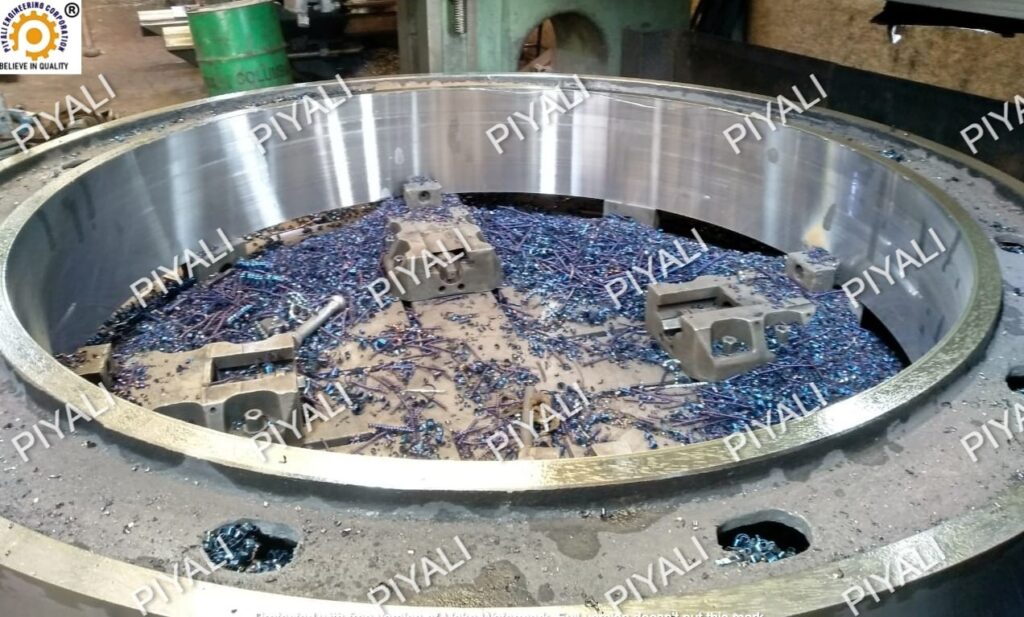
- Final Machining: In this step, the kiln tyre subjects to the final machining procedure, which entails polishing and completing the tyre’s surface. This procedure guarantees that the tyre’s surface is flawless and free of flaws or blemishes. The final machining procedure contributes to the tyre’s increased toughness and wear-and-tear resistance.
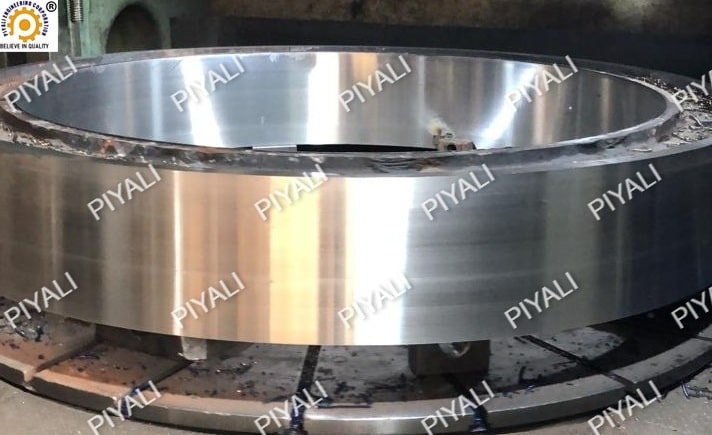
STEP 7: FINAL INSPECTION
Final inspection in kiln tyre manufacturing is a critical procedure to guarantee that manufactured products meet the required specifications and are of high quality.
- DIMENSIONAL TEST: Final machining dimensional testing is a quality assurance process that makes sure the finished item or component complies with the requirements for its intended use. In dimensional test, measure the key dimensions of the kiln tyre to ensure that it meets the required specifications.
- Inspect the kiln tyre for any visible defects.
- Measure the diameter of the kiln tyre at various points along its circumference.
- Measure the width of the kiln tyre at its widest point.
- Measure the thickness of the kiln tyre at various points along its circumference.
- Check the roundness of the kiln tyre by measuring the distance between two points on its circumference.
- Compare the measured dimensions to the design specifications and margins.
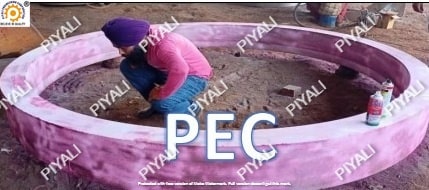
- DP TEST: DP test is a non-destructive testing (NDT) method for inspecting kiln tyres for surface defects in metallic and non-metallic materials.
- DWELL TIME: A liquid dye penetrant is applied to the surface of a kiln tyre, absorbed into cracks and surface defects, and a solution is applied to remove color and highlight defects.
STEP 8: PACKAGING AND DELIVERY
MATERIAL DISPATCH PLANNING : ROTARY KILN TYRE
Material dispatch planning is the process of making sure the right materials are available at the appropriate time and in the proper quantity to satisfy the production needs of the kiln tyre manufacturing.This involves identifying the materials necessary for each production phase, choosing the materials from the stock, and delivering them to the production unit.
- Wooden Box Packing: A wooden box can be a good choice for packing heavy equipment for storage or transportation. To determine the proper size of the required wooden box, measure the kiln tyre first. Choose a large, solid wooden box that can hold the equipment and leave the enough space for protection and security. The box needs to be strong enough to support the weight and pressure of the equipment.
- Carefully align the kiln tyre.
- Place the kiln tyre in a wooden box.
- Seal the box carefully to prevent movement.
- It is important to include all the relevant shipping information on the box’s label, along with the proper handling directions.
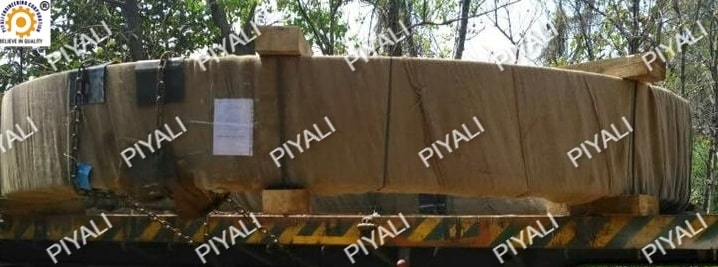
DELIVERY:
The kiln tyre with shell product is delivered to the customer.
ROTARY KILN TYRE WITH SHELL: APPLICATIONS
We offer a wide range of all kind of machinery spare parts and equipment for Sponge iron plant (DRI), cement plant rotary dryer, cement plant rotary kiln, cement plant ball mill mixing grinding unit, sugar mill dryer, paper mill dryer, paint industries mixing dryer, soy sauce residue dryers, phosphate rock slag,
Adipic acid plant, sodium percarbonate plant, soda ash plant, refined salt, sodium percarbonate, anhydrous sodium sulphate, potassium chloride, potassium nitrate, ammonium chloride, ammonium nitrate, ammonium sulfate, calcium chloride, calcium hypochlorite, calcium sulfate, granulated porcelain clay, Granulated fertilizer, iron sulfate, potassium carbonate, potassium chlorate, potassium phosphate,
Potassium tartrate sludge, sodium hydrogencarbonate, sodium bromide, sodium chlorate, sodium formate, PVC, CPE, PC, chemical, mining, pharmaceutical, food, feed industrial, municipal sludge treatment industries, choline chloride, sodium bicarbonate, potassium chloride, magnesium sulfate, feed yeast, ammonium nitrate, calcium chloride, calcium hypochlorite, potassium carbonate, potassium sulfate, sodium carbonate,
Sodium hydrogencarbonate, sodium metasilicate, potassium nitrate, slag, metal powder, diatomaceous earth kaolin, starch residue, distiller’s grains, dregs, soy sauce residue, phosphorus fertilizer sulfur Ammonium, light calcium carbonate, clay, lime slurry, ore mud, phosphate rock slag, Dispersing Rotary Dryer, sludge drying, municipal sludge, paper sludge, printing and dyeing sludge, blending combustion of power plant boilers, Steel making sludge, brewer’s grains, phosphate rock powder, penicillin slag, antibiotics residue, pomace, sauce residue, Steam Rotary Dryer, rotary kiln hazardous waste, paper mill recycling unit and etc.
OUR EXPORT MARKETS:
We have supplied materials in India ( West Bengal, Jharkhand, Chhattishgarh, Raipur, Raigarh, Pune, Maharashtra, Mumbai, Tamil Nadu, Chennai, Kolkata, Durgapur, Asansol, Purulia, Jamshedpur, Ranchi, Odisha, Orissa, Bhubaneshwar, Karnataka, Hyderabad, Gujarat, Andhra Pradesh, Madhya Pradesh, Rajasthan, Meghalaya, Assam, Bihar etc.) and International Locations Egypt, Sudan, South Africa, Kiln Tyre Manufacturers, Tanzania, Kenya, Zambia, Saudi Arabia Emirates, United Arab Emirates, United Kingdom, Canada, Poland, Oman, Philippines etc.
How you select a best materials grade for Kiln Tyre?
- Working conditions: The material grade should be able to handle specific loads and stresses in the kiln.
- Budget: Choosing the finest material grade for the kiln tyre will depend in part on how much the materials will cost.
- Type of process: Different kiln processes affect tyre wear and tear.
- Size and weight of the kiln: The size and weight of the kiln affect tyre loads and stresses.
Why you should buy Kiln tyre with shell from PIYALI?
PIYALI Engineering Corporation is a well-known and reputable manufacturer and supplier of Rotary kiln tyres with shells. Here are some reasons why you should consider buying kiln tyres with shells from PIYALI:
- PIYALI commits to provide high-quality products.
- PIYALI offers customized kiln tyres with shells to meet customer needs.
- PIYALI works closely to understand the requirements and design of kiln tyres with shells.
- PIYALI has experienced and knowledgeable professionals who provide valuable advice and guidance to customers.
- PIYALI provides excellent customer service and support.
- PIYALI offers competitive pricing for kiln tyres with shells, providing value for money.
